
Would strawberry work with the chocolate dessert you already sell? It’s a reasonable idea for a café special. Before ordering for the launch, though, it’s worth putting the proposed topping beside the familiar one and trying both with the dessert.
A flavour name can give you an idea. It can’t tell you whether you’ll prefer the finished dish. The CreamJet shop includes Original and flavoured options, and a small menu trial gives the kitchen a way to choose between ideas without committing the whole menu to one.
Let’s use that chocolate dessert as a hypothetical example. We’re planning a comparison here, not reporting results from a CreamJet product test.
What would make the new version worth serving?
The first conversation belongs in the kitchen, before the tasting. Is strawberry meant to be the main flavour of the topping, or just a small part of the dessert? What should happen to the chocolate? If one colleague wants a strong berry flavour and another barely wants to notice it, they could disagree about a sample for perfectly sensible reasons.
A sentence beside the recipe can settle the aim for now. For example: “We want to notice the berry flavour without losing the chocolate.” That is a brief for this imagined trial, not a promise about a particular cylinder.
Your usual recipe gives the team something familiar to compare it with. Write down the ingredients and quantities, then serve the intended portion on the actual dish. The cup, plate and garnish matter to the comparison as well. A spoonful of cream in a bowl isn’t the item a customer will order.
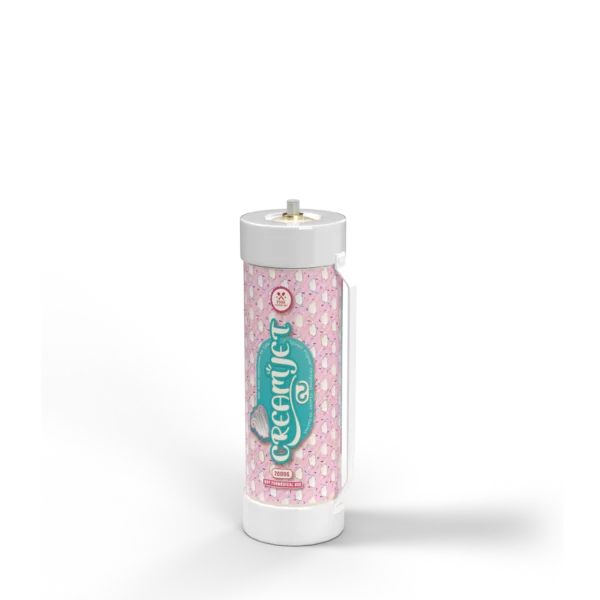
This photograph doesn’t prescribe a cylinder size or setup. Check suitability before preparing samples: the exact whipper, gas supply, connections and recipe need to be allowed by their manufacturers. Similar fittings are not proof of compatibility. Follow the operating instructions throughout, without improvised connections or changes to charging instructions.
Give yourself a comparison you can explain
Suppose you use less syrup in the strawberry version and add a different garnish. The team may prefer it, but which change did they like? It could be the revised sweetness, the garnish, the flavour, or the combination.
There’s nothing wrong with comparing two complete recipes if that’s what you intend. Just describe the result that way. To look at one change, leave the rest of the recipe alone wherever the product and equipment instructions permit. If those instructions require a different recipe or procedure, record the difference rather than calling it a like-for-like trial.
Try a little of the prepared topping by itself, then return to the whole dessert. In our example, the important question is whether the chocolate and berry flavours have the balance you wanted. A sample that gets the most votes on its own needn’t be the one you choose for the dish.
It helps to let everyone write a comment before the discussion starts. “I liked this with the chocolate” gives the next person something specific to respond to. Samples labelled A and B can keep attention on the food, but the preparation record must still identify them. Everyone tasting needs the ingredient and allergen information; sample letters must never hide that.

The tasting stays within your café’s normal preparation, chilling, service and allergen procedures. Taste cannot establish safe storage or shelf life. Don’t leave dairy samples out to see how long they last.
There’s still a little work before the chalkboard
Once a version is chosen, another trained colleague should be able to prepare it from the recipe record. If they have to ask how much garnish you used or which product you meant, add the missing detail. The café consistency log can help with portions and presentation after the recipe is settled.
The name of the special also deserves care. “Made with fresh strawberries” is an ingredient claim; strawberry flavour alone won’t support it. Current specifications for the cream, flavouring, sauces and garnishes belong with the recipe. Ask the supplier about anything unclear before selling the dish.
“Dairy-free” and “allergen-free” need the appropriate ingredient evidence and kitchen controls too. The Food Standards Agency’s allergen guidance covers ingredient records, recipe changes and cross-contamination for England, Northern Ireland and Wales. Elsewhere, follow the requirements that apply to your café.
For the costing, use actual purchase costs and the portions you observed. Include the cream and other ingredients, preparation time and discarded trial batches. A cylinder’s printed gas content cannot tell you what each finished dessert costs. There also needs to be room for the additional product in the stock record and a preparation routine that fits the shift.
You might keep the new version for a single special. You might decide the original recipe was the better fit after all. Either decision is worth recording with the recipe version, so the next person knows why it was made.
If you do need a larger order, use the CreamJet wholesale enquiry page to confirm the exact variant and current supply options for your destination. Agree the arrival arrangements before setting a launch date around them.