
“Did all the CreamJet cartons arrive?” is an awkward question when the person who took the delivery has gone home. You can see three cartons. The invoice says four. Perhaps the fourth is coming tomorrow, but nobody has left a note.
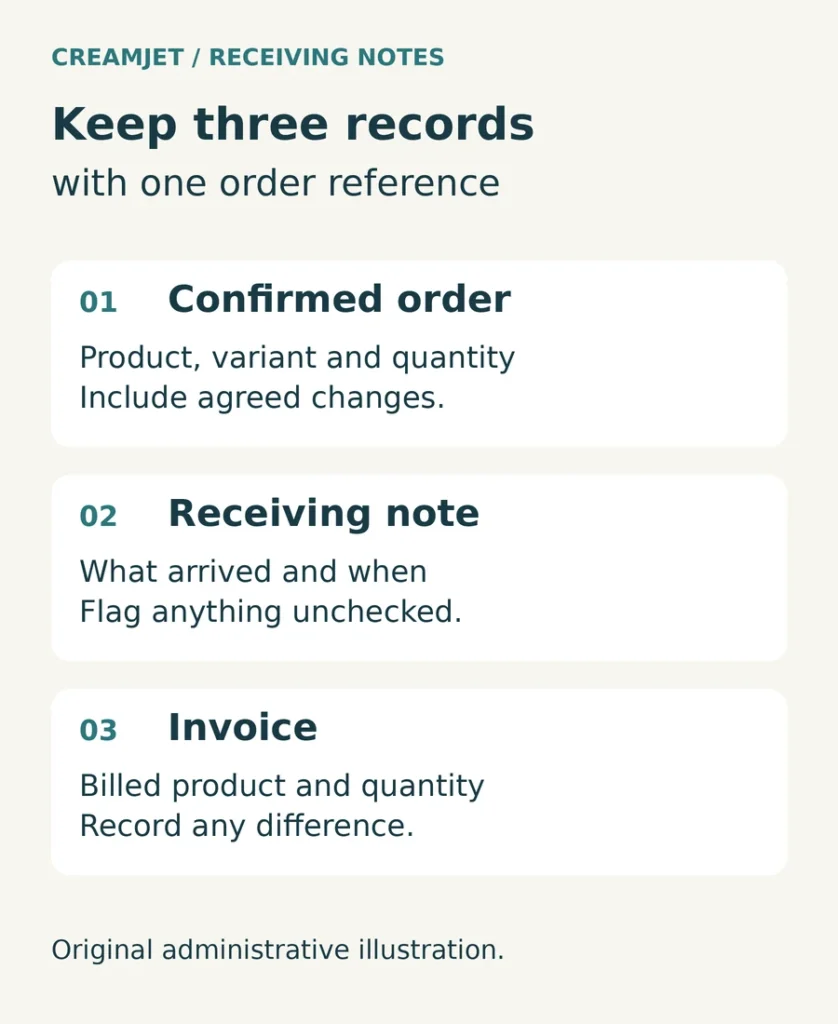
That’s a made-up example. The fix is fairly ordinary: keep the order confirmation, the receiving note and the invoice together. Each tells you something different.
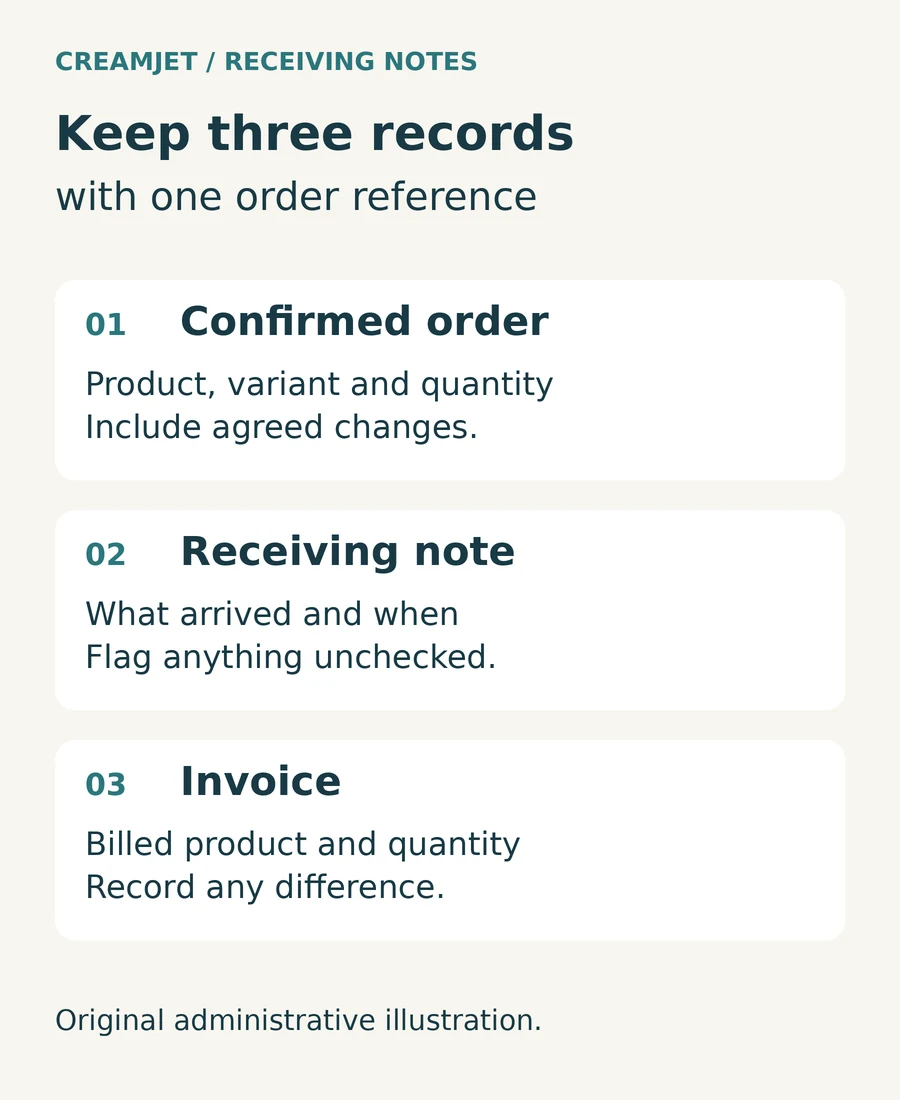
What did you agree to buy?
Use the latest confirmation. If you changed the quantity after getting a quote, the receiving team needs that change too. Include the product name and variant, rather than just “CreamJet”.
A carton count also needs some context. How many cylinders were agreed per carton? The CreamJet size and carton guide explains the catalogue terms, but the packing details for your purchase should come from the confirmed order.
What was actually checked?
There’s nothing wrong with a receiving note that says “three cartons; contents not yet checked”. It tells the next person exactly where things stand. Writing down an assumed cylinder total would hide the unfinished check.
Add the arrival date and delivery reference. Copy any relevant batch reference you can read; an unclear code is a question for the supplier. Where safe and allowed by your procedures, a photograph can help explain a discrepancy. Leave people and unrelated paperwork out of it.
This is an administrative check. Follow the product’s safety information and your workplace’s receiving procedures. If damage or a possible leak raises a concern, follow the relevant safety or emergency procedure instead. Don’t connect, open or test a cylinder to investigate a missing quantity.
And the fourth carton?
Check the messages for a split delivery. If that doesn’t explain it, send the supplier a specific question with the order reference: “The order lists four cartons. We recorded three on arrival. Is another delivery due?”
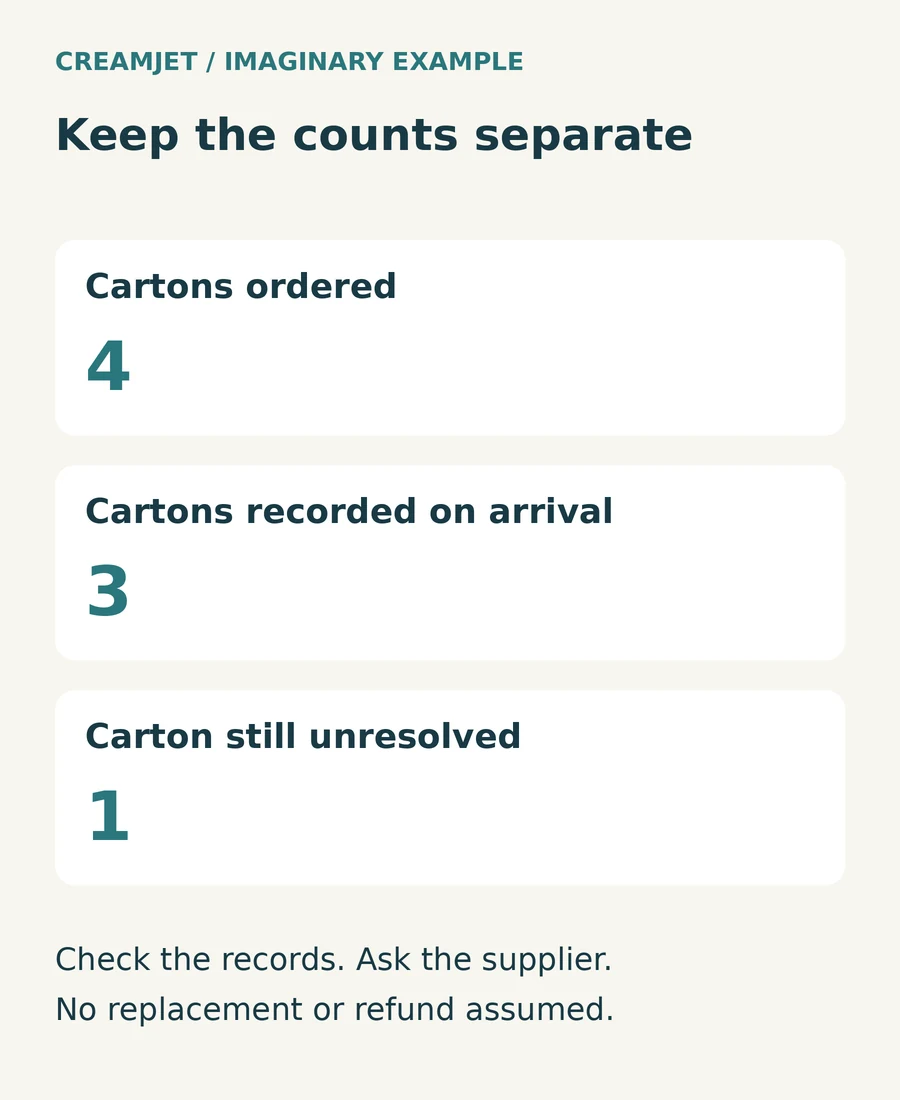
Keep the question open until there’s a confirmed answer. A supplier saying they’ll look into it doesn’t establish a replacement or a credit. Put the response beside the original note, with the name of the colleague following up.
Your usual purchasing sheet can hold all of this. Give it columns for the agreed quantity, observed quantity, anything unchecked and the next action. Link the order, delivery note and invoice to that row. When the issue is settled, record what was agreed so someone checking invoices next week doesn’t have to start again.
The sheet is a handover aid, not a substitute for your business’s applicable traceability duties or the supplier’s reporting terms.
For the next purchase, agree the product and packing quantities through the CreamJet wholesale enquiry page. Pass the confirmation to the person expecting the delivery. They’ll appreciate having the answer before the cartons turn up.