
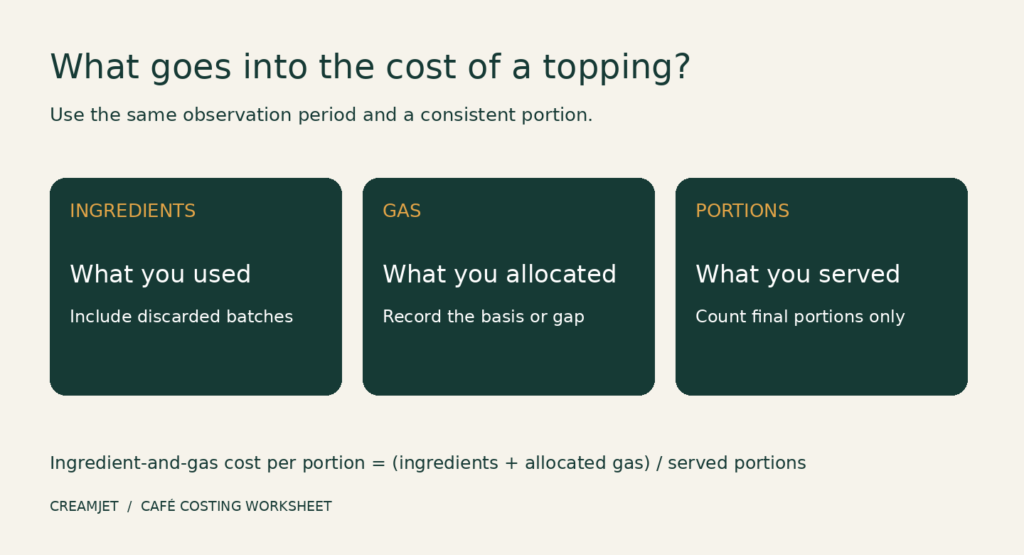
“We spent £24 on toppings” and “each topping cost 20p” are different answers. The second needs a portion count. It also needs a clear idea of what went into that £24.
Here is a small, made-up example for a café serving hot chocolate. Across a recorded period, ingredients consumed cost £18.00 and the allocated gas costs £6.00. There are 120 finished portions served to customers. Divide £24.00 by 120 and the answer is £0.20 per portion.
This is arithmetic, not a CreamJet product test. The prices and quantities are invented; they don’t predict how many servings a cylinder will produce.
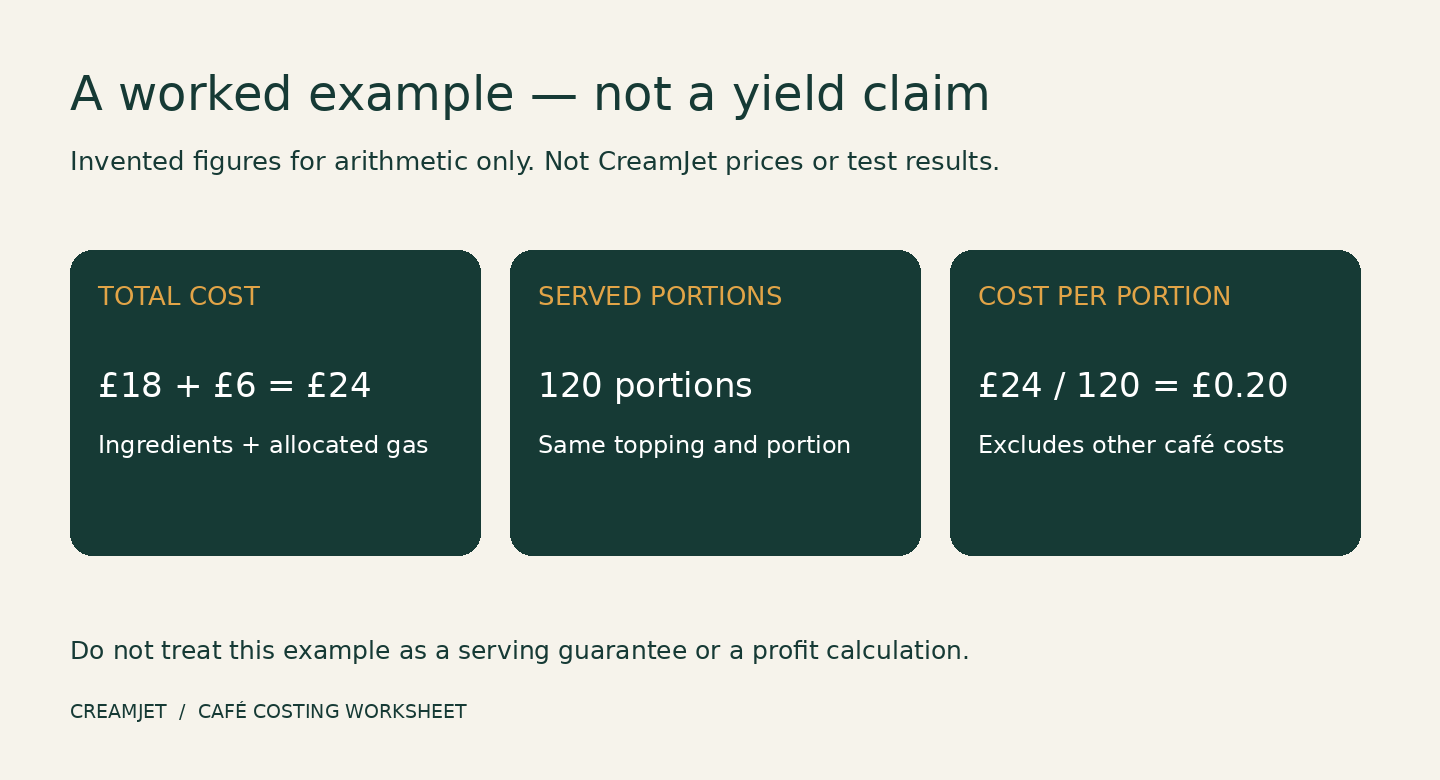
Illustrative arithmetic only. These figures are not a product price, serving guarantee or measured café result.
Where the calculation can go wrong
The till count is a useful place to start, but check what it represents. Does every hot chocolate have this topping? Were some drinks made without it? A dessert using the same cream may have a much larger portion. Those desserts need their own entry, not a place in the hot-chocolate total.
A remake is another trap. Count the finished portion once, while including the ingredients and gas wasted on the first attempt. The same goes for a discarded batch: its ingredients were consumed even though they never made it onto a customer’s drink.
Now look at the purchases. If half a pack of ingredients is still unused, the whole invoice amount doesn’t belong against this period’s drinks. Keep usable leftovers separate from both consumption and portions served.
Gas presents a less convenient question. A cylinder purchased on Monday may still be in use on Tuesday. Putting all its cost against Monday would make that day look expensive and Tuesday look cheap. Neither figure would describe what you used.
For that gas entry, use an allocation you can explain from your normal usage records. No reliable figure yet? You can still total the ingredients, but label the result “ingredients only; gas not yet allocated”. An empty gas field must not quietly become zero in the calculation. If you use an estimate instead, write down its basis.
It may be easier to account for a longer period than to force a daily figure out of the records. That is a bookkeeping choice, not a reason to improvise a cylinder-handling or measurement procedure.
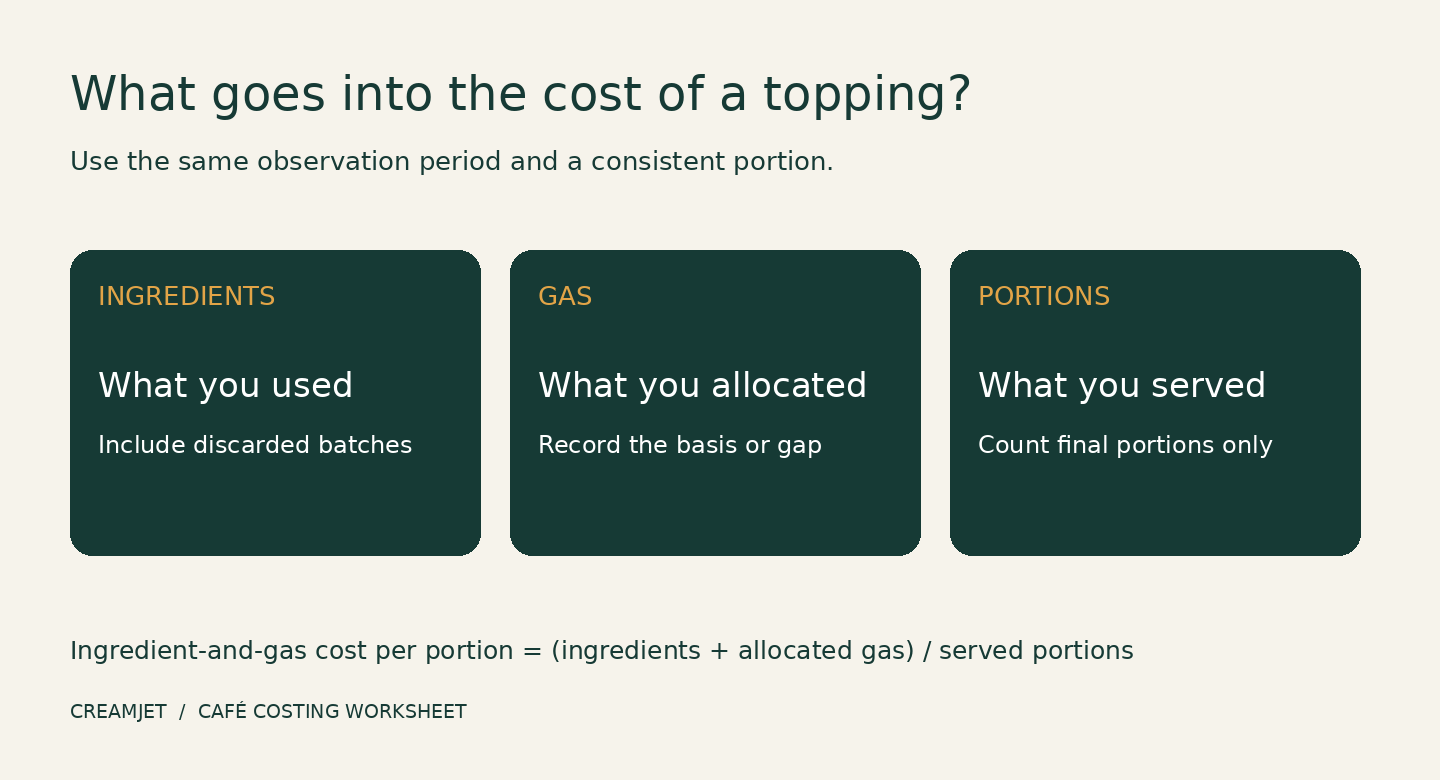
Use records from the same period. Money spent buying stock is not automatically the cost of stock used.
The worksheet
Keep one currency and a consistent treatment of tax. The formula is:
(Ingredients consumed + allocated gas cost) ÷ portions served = cost per portion.
| Record | Your entry |
|---|---|
| Dates, menu item and portion description | |
| Recipe or batch reference | |
| Ingredient cost consumed, including waste | |
| Allocated gas cost and how it was established | |
| Portions served | |
| Remakes, waste and leftovers | |
| Calculated cost per served portion | |
| Unresolved or estimated figures |
Already using the one-shift whipped-cream consistency log? Copy the batch reference across so you can find the original notes later. Keep a photo or description of the agreed topping with them. When the portion changes, give it a new entry rather than averaging the old and new versions together.
Costing must not change the safety rules. Follow your food-safety procedures and the equipment manufacturer’s instructions, including permitted gas and accessories. Don’t change operating pressures, exceed fill limits or keep ingredients longer to reduce the recorded cost.
Before you act on 20p
Back to our £24.00 example: serve 100 portions instead of 120 and the answer becomes £0.24. There is no supplier verdict hidden in that four-pence difference. Larger toppings, a discarded batch or a questionable gas estimate could account for it. Read the notes beside the total before deciding what to change. Another period with the same recipe and portion will give you a more useful comparison than a single short trial.
When comparing a supply quote, use the CreamJet size and carton guide for pack quantities and the wholesale quote checklist for the product, quantity and delivery details to send. The quote supplies an input; your own usage records turn it into a cost per topping.
File the result under topping costs, not profit per drink. You still have labour, equipment, utilities and the rest of the hot chocolate to account for. Keep the estimate label too, if you used one. The next person opening the sheet should not have to guess which numbers came from records and which are still waiting to be checked.