
‘Cream was fine’ doesn’t tell the next shift which batch you used or how it looked on the drink. A useful handover needs a little more detail: the batch reference, the menu item and a note on the topping’s shape.
The whipped-cream consistency log below is a place to keep that detail. Start with one approved recipe and one drink or dessert, and leave a note about anything the next team needs to check. That’s the extent of it. A kitchen log can’t establish that one charger brand performs better than another.
What counts as a good portion
Before filling in the sheet, settle on the serving you want staff to reproduce. Photograph it in the cup or on the plate you normally use. Alongside the photo, describe the cream’s shape, position and coverage. The photo is your reference; the notes explain which details matter.
There’s also the question of when to look. Straight after dispensing, or at another agreed point in service? Choose one, and use the same cup or plate for each check. An entry made at a different point is still worth keeping, provided it says so.
Already weighing portions? Keep your existing target and method. Otherwise, leave the weight as “not measured”; a guess adds nothing useful. Measured weights need a unit, whether that’s grams or ounces for a US team. Stick with that unit throughout the sheet.
The details that belong to the batch
The top of the sheet holds the information shared by all observations of that batch. Much of it may already be in your kitchen records. Refer to those records wherever that avoids copying the same details:
- Date, shift and batch reference: [date / shift / batch ID].
- Recipe name and version: [approved recipe / version]. The quantities stay in the recipe record.
- Ingredients: [dairy cream or approved alternative / product name / ingredient supplier / batch or lot reference, where available].
- Equipment: [dispenser make, model and the team’s ID for this unit].
- Charger system: [exact food-grade N₂O product / compatible system approved for this equipment / gas supplier / batch reference, where available].
- Preparation: [prepared by / time / reference to the usual storage and food-safety records].
Don’t combine the suppliers in one field. Ingredient labels and ingredient suppliers are the starting point for allergen questions. Gas questions go to the gas supplier. The equipment manufacturer can advise on compatibility and how to use the dispenser.
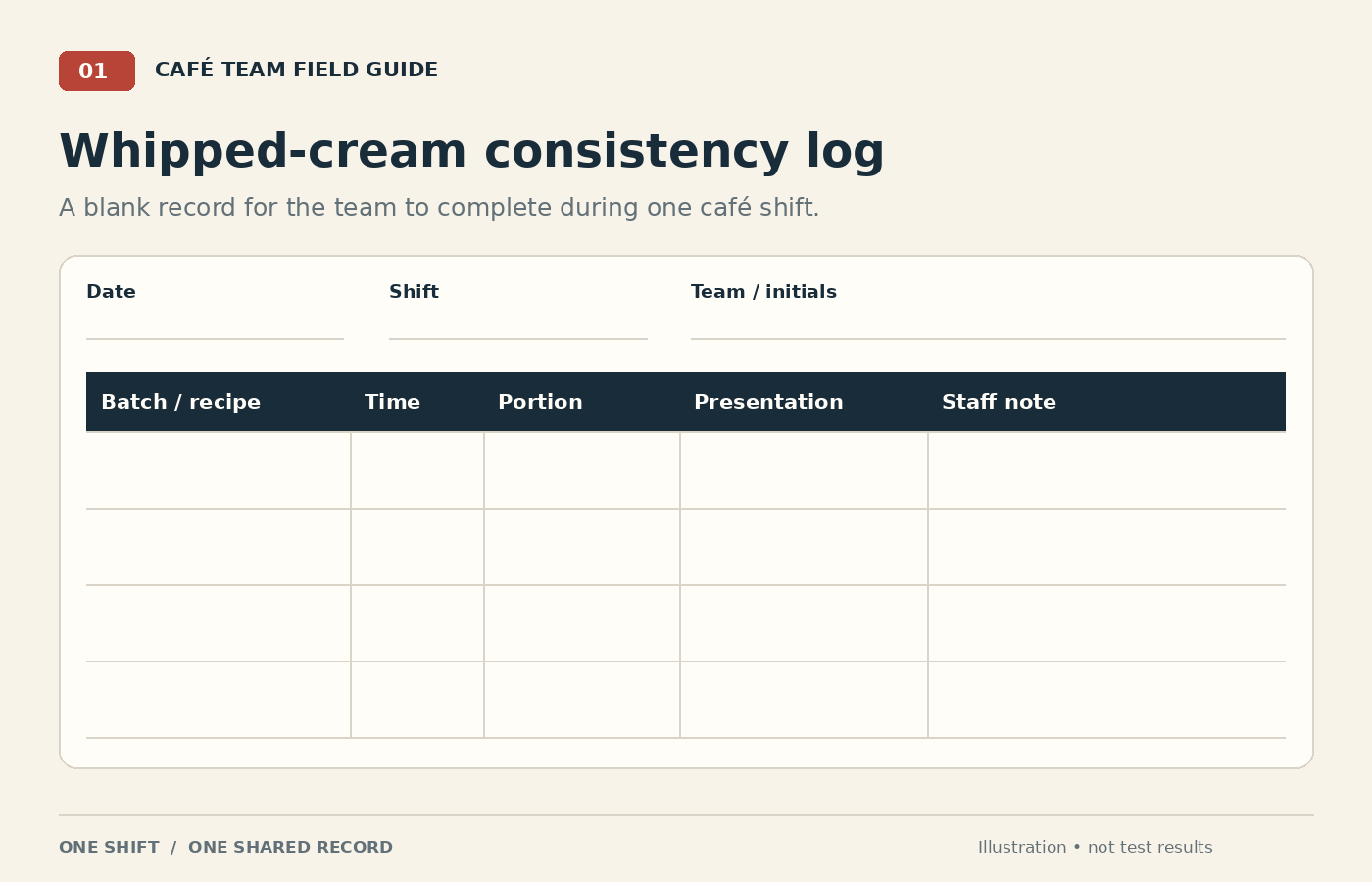
A service entry you can copy
Each new batch needs its own reference, with recipe and dispenser labels clear enough to match it to the sheet. Under those batch details, add the service observations. A paper sheet is fine, as is a spreadsheet if that’s easier for your staff. Agree when to fill it in, with room for extra entries when something changes.
Copy the following fields for each observation:
- Observation time: [time]
- Batch and menu item: [references]
- Intended portion: [agreed appearance or existing weight target]
- Actual portion weight, if measured: [value and unit / not measured]
- Presentation: [what you saw, compared with the agreed standard]
- Serving context: [cup or plate, and when you observed the portion]
- Staff initials and note: [who observed it and any relevant context]
- Action taken: [action under the café’s existing procedure, or none]
A note such as “shape matches the reference” gives the next person something specific to work with. So does “liquid visible around the topping”. “Bad cream” leaves them guessing. These are examples of wording, not results from a CreamJet trial.
Appearance cannot establish food safety. The log sits alongside your kitchen’s approved allergen, hygiene, storage and discard procedures, the ingredient label and the equipment instructions. All of those still apply. A topping that looks good is no reason to extend its holding period.
What the next shift needs to know
At handover, look for repeated observations attached to the same recipe and setup. Check for gaps as well. A missing time or an ingredient change nobody recorded may be enough to prevent a useful comparison.
Here’s a hypothetical example: the ingredient product changes, then someone records a topping losing its shape. Both facts belong in the log. The second doesn’t establish that the first caused it. A shift’s notes won’t rule out every other cause, or tell you which supplier is better.
A supervisor might use those notes to plan a trial of one recipe variable, keeping the other recorded conditions as consistent as practical. Any recipe change needs normal approval and an allergen review. Extra gas and improvised pressure adjustments aren’t ways to run that trial; follow the equipment manufacturer’s instructions.
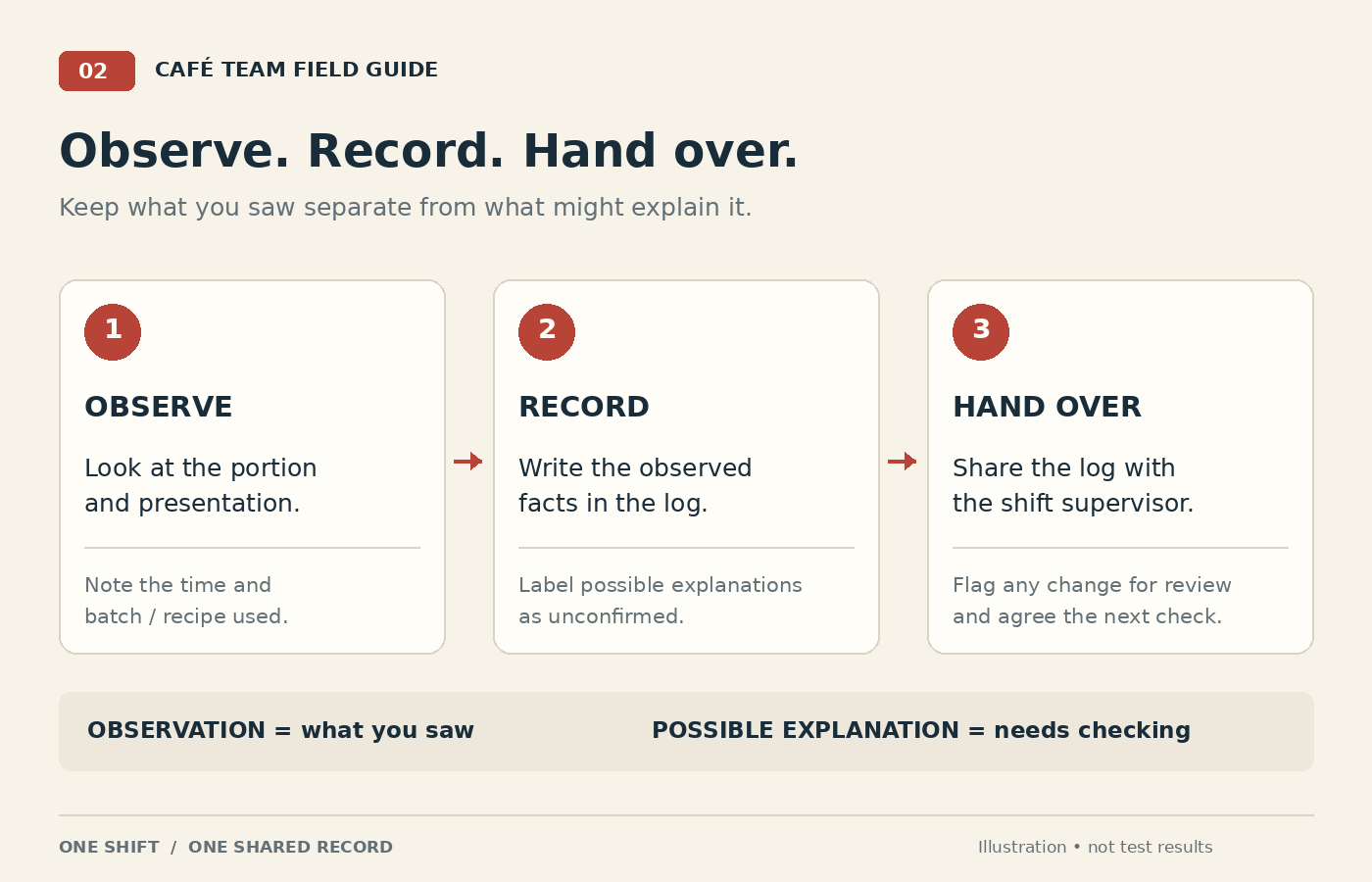
The handover itself can be three lines:
- What we observed: which portions matched the agreed presentation and which differed.
- What remains uncertain: [missing information / explanation still to check].
- Who does what next: [name / next action]. This might be reviewing the recipe record, checking an ingredient label or contacting the relevant supplier.
If the equipment behaves unexpectedly, stop using it and follow the manufacturer’s fault guidance. Ask the supervisor or manufacturer for help straight away. Recording how a portion looks won’t resolve a fault.
File the sheet with your usual kitchen records. Once staff have used it for a few shifts, ask which fields they actually need and remove anything that serves no purpose.
For purchasing questions that come out of the review, there’s a separate food-grade N₂O wholesale quote checklist with the details a supplier will need.